

Look away now if you’re one of those people who compare a daily soap opera to a twice-weekly drama serial.
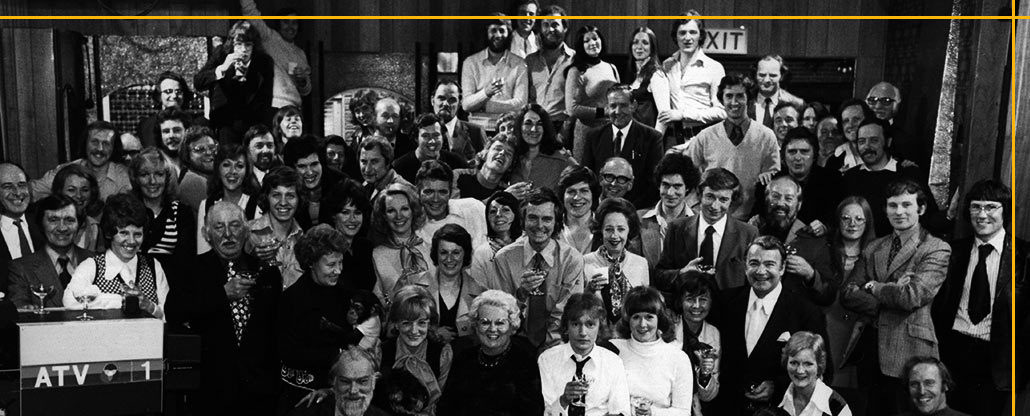
If you understand that for almost twenty years Crossroads was unique in British broadcasting, then welcome to the motel. This fan club, creator and production company endorsed, aims to celebrate the long-running Midlands saga – a show that became one of ITV’s most popular, and famous, daytime programmes.
The series was commissioned in 1964 by Lew Grade, devised by Peter Ling and Hazel Adair, and the format was developed by producer Reg Watson who went on to give viewers serials such as Neighbours, The Young Doctors, Prisoner: Cell Block H and Sons & Daughters.
Crossroads, despite what some write about it these days, at its peak was one of the most popular programmes in the UK and became greatly loved by millions of fans. The show was knocked by critics and those who didn’t watch it enough to understand it, but for nearly 20 million viewers the saga was a must-see daily treat. The production was finally seen in each UK commercial TV region (at varying times rather than networked) from 1972 onwards with it storming up the TV top ten.

By the end of the year, it was only a few thousand viewers behind some primetime series’ such as Coronation Street. During several periods in the 1970s Crossroads was the UK’s number one programme. Not just beating all other ITV productions, but the BBC ones too. The show also won numerous awards; as did its cast. For many years the series was the UK’s second-watched saga. Even when it ended in 1988 it was the UK’s third most favourite ‘serial’, and Yorkshire Television’s Emmerdale Farm was fourth.
This was a daytime soap that reached prime-time ratings!
Soaps, Serials and Series
Television critics gave Crossroads its reputation by comparing it to other ‘similar’ programmes. However, in the UK Crossroads was the only ‘true soap opera’ styled on the American format. ITV had tried a 10-minute daily serial in the 50s – Sixpenny Corner – but it was in the serial format, not soap.
Theatre critics do not compare end of the pier productions to West End shows, but for some reason telly writers seem to want to plonk everything in the same box. Had Granada or Yorkshire produced a ‘soap’ in the sixties then the motel saga could have been rightly compared like for like, but as it was on its own it obviously doesn’t stand up against such comparisons, even though the twice weekly formats also had wobbly walls and fluffed lines occasionally too.
Soap Opera
In the UK only one has ever been made to the American format. They are usually melodramatic, have an end of episode hook cliffhanger and use zoom shots and incidental music regularly for ‘dramatic effect’. They also, at times, lean into the sensational fantasy slant of storytelling. The difference between the UK and Australian versions to the stateside originals is the American ones air in hour-long slots. For Crossroads at its ‘soapiest peak’ 2 and a half hour of television was produced in three days of studio time.
Soap Operas: Crossroads, As The World Turns, Days of Our Lives, The Bold and the Beautiful, Neighbours, Sons and Daughters, The Young Doctors.
Drama Serial
Drama serials were traditionally two or three half-hour episodes a week, produced in the same amount of time a soap opera would have to create five episodes. These programmes were rooted in reality, every day dramas with life events taking the focus. A mix of kitchen sink dramas and comedy.
Drama Serials: Coronation Street, Emmerdale Farm, Emergency Ward 10, The Grove Family, Together, EastEnders, Eldorado.
Drama Series
The drama series format is the basis of the above serials; however, the difference is the time a series is given to be made – often twice the length of studio production for one episode of a series – and also these types of dramas would often only be of a ‘limited run’ six or eight episodes a year.
Drama Series: Upstairs Downstairs, The Power Game, Edward the Seventh, Tenko, Brideshead Revisited, Play for Today, Secret Army.
There are of course also ‘action series’ and ‘crime dramas’ but thankfully no critic was ever stupid enough to compare Crossroads to The Saint, Taggart, Tales of the Unexpected or The Avengers, so they did have some limits.
Of course, soap is now used as a short-hand term for all the half-hour series or soaps, which is fine – as long as you don’t compare Home and Away to Emmerdale.
The Crossroads Fan Club launched in its original form as The Noele Gordon and Crossroads Appreciation Society on April 4th 1988 – on the same day as the last-ever episode aired. Contrary to what television critics may claim the network didn’t actually axe Crossroads. One executive at the Central production company who didn’t care much for soap opera discontinued it. He wanted their Midland studios to be creating big-budget drama content rather than what was deemed as a cheap filler programme.
We know most people at Central were sorry to see the series end just as much as the viewers were. With 14 million fans still keen for a dose of motel life Crossroads’ unfair removal from commercial television has kept the show’s fans united together far more than many other departed programmes. We have been proud to co-operate with Central, Granada and Carlton over many years and we thank all the staff at the companies, past and present, who went beyond their paid duties to help the fan club. These are the people who make commercial broadcasting great; Without them, we wouldn’t have had so many great events, the wonderful photograph archive, documents, fact files and many lost episodes back in the archives. They, like us, do it for the love of. And we know Nolly would be so pleased about that.
Crossroads is still greatly loved and much missed by many of its viewers. Andy Allan, the former Programme Controller at Central Television, said in 1988 when the series ended, it would be forgotten in eighteen months… nearly 40 years later it’s certainly gone but very much not forgotten!
No one needs to defend Crossroads – its legacy, when looked into properly, speaks for itself. With this site, we hope to promote the achievements which made the show a national institution and one of ATV and Central Television’s long-running successes. To date, it is still the ITV network’s number one rated weekday daytime programme and has been repeated in various countries around the world, including the UK, since it ended production.
Even Andy Allan later admitted taking it off had been the biggest mistake of his career!